

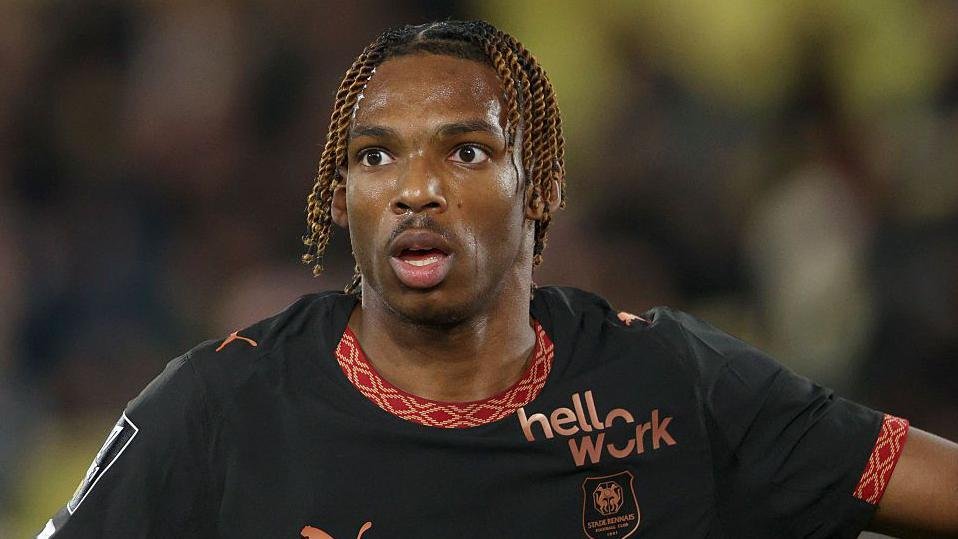
At some point, every great team faces the same uncomfortable question: what happens when the pillar finally cracks? For Liverpool, that question has a name, a captain’s armband, and a presence that has shaped an entire era. Van Dijk is 34, under contract until 2027, and still sets the tone — physically, tactically, emotionally. But elite clubs don’t wait for the decline to begin. They plan while the standard is still sky-high.
That is why the agreement to sign Jérémy Jacquet feels less like a “transfer story” and more like a strategic statement.
Liverpool have reached an agreement with Stade Rennais FC for the 20-year-old centre-back to join ahead of the 2026/27 season, with the deal widely reported at £55m plus up to £5m in add-ons and subject to international clearance and a work permit. The timing matters: Jacquet is expected to remain in Ligue 1 until the end of the current campaign before making the move to Anfield in the summer.
Why this signing is about more than “another young defender”
It is tempting to treat any expensive 20-year-old as a bet on potential. But Liverpool’s model is rarely that simple. They don’t just buy talent — they buy profiles that fit the league, fit the tempo, and fit the demands of playing in a high line under pressure.
Jacquet’s profile is clear: physical, aggressive in duels, comfortable defending his box, and built for aerial battles. That is exactly the type of foundation you need if you’re imagining a future without Van Dijk organising everything behind you.
And the fee tells its own story. In a market where proven centre-backs are either unavailable or wildly overpriced, Liverpool are paying for scarcity: young, top-league experience, and high ceiling — with time to develop before being thrown into the deepest water. ESPN described Liverpool viewing him as a key part of their defensive rebuild, which fits the logic of buying early rather than scrambling late.
The hype is real — and it’s coming from serious voices
French football expert Julien Laurens has been publicly bullish, comparing Jacquet’s emergence to William Saliba breaking through in France — the kind of comparison that makes fans sit up, because Saliba is now the benchmark for “young defender who becomes elite.”
Sky Sports also leaned into the excitement, with pundit discussion welcoming the Saliba comparison while still stressing that development is never guaranteed at this level. That balance is important: Jacquet has serious tools, but the Premier League punishes rawness.
What Jacquet has actually done so far
The simplest argument for Jacquet is availability and trust. He’s not a “youtube defender.” He’s playing. Reports around the deal point to 18 Ligue 1 appearances this season, which is a serious workload for a 20-year-old centre-back in a league that can be unforgiving to young defenders.
At international youth level, he has already collected recognition that tends to track with genuine potential: Jacquet was named in the 2024 UEFA European Under-19 Championship Team of the Tournament. That doesn’t make him a finished product — but it does put him in a category Liverpool tend to trust: elite youth pedigree, plus meaningful first-team minutes.
The Van Dijk shadow: why the comparison is fair — and why it’s risky
Let’s be honest: “next Van Dijk” headlines are a trap. Van Dijk isn’t just a defender; he is a system stabiliser. He reduces panic. He dictates spacing. He makes other defenders better because they can defend with confidence.
Jacquet won’t walk into that role immediately — and he doesn’t need to. The smartest part of this deal is the timeline. Liverpool are buying themselves a runway: a year-plus of development (and likely more) before Jacquet is asked to carry responsibility at the highest level.
If Liverpool manage this properly, Jacquet arrives into a squad that can integrate him gradually — cup games, controlled league minutes, mentorship, and tactical education — rather than throwing him into chaos because there is no alternative.
Beating the competition matters
Liverpool didn’t make this move in a vacuum. The reporting around the deal consistently frames it as a competitive chase, with Chelsea F.C. heavily linked as a rival suitor. When clubs at that level fight over the same young defender, it usually means the scouting picture is aligned: the player has traits that translate.
That said, this is where Liverpool must be ruthless with expectations. Paying a major fee for a 20-year-old creates instant pressure — not just on the player, but on the narrative. Every mistake becomes a “£60m mistake.” Every quiet game becomes “is he ready?” The club’s job is to protect the player from that noise while still accelerating his learning.
What this means for Liverpool’s defence next
Even before Jacquet arrives, the deal signals something: Liverpool are shaping their next centre-back cycle now. The club can’t allow a future where Van Dijk ages out and the replacement plan begins after the decline becomes visible.
This is the correct approach — but it only works if they stay consistent. One “high-upside” signing doesn’t solve squad structure on its own. The next 12–18 months will still require smart planning around minutes, contracts, and defensive partnerships.
For now, the headline is simple: Liverpool have moved early, spent big, and backed a young defender they clearly believe can become a major piece of their next era. Whether Jacquet becomes a successor, a partner, or a different kind of leader entirely, the intent is obvious.
This isn’t Liverpool guessing. It’s Liverpool preparing.
Watch below the incredible highlight of Jeremy Jaquet:

