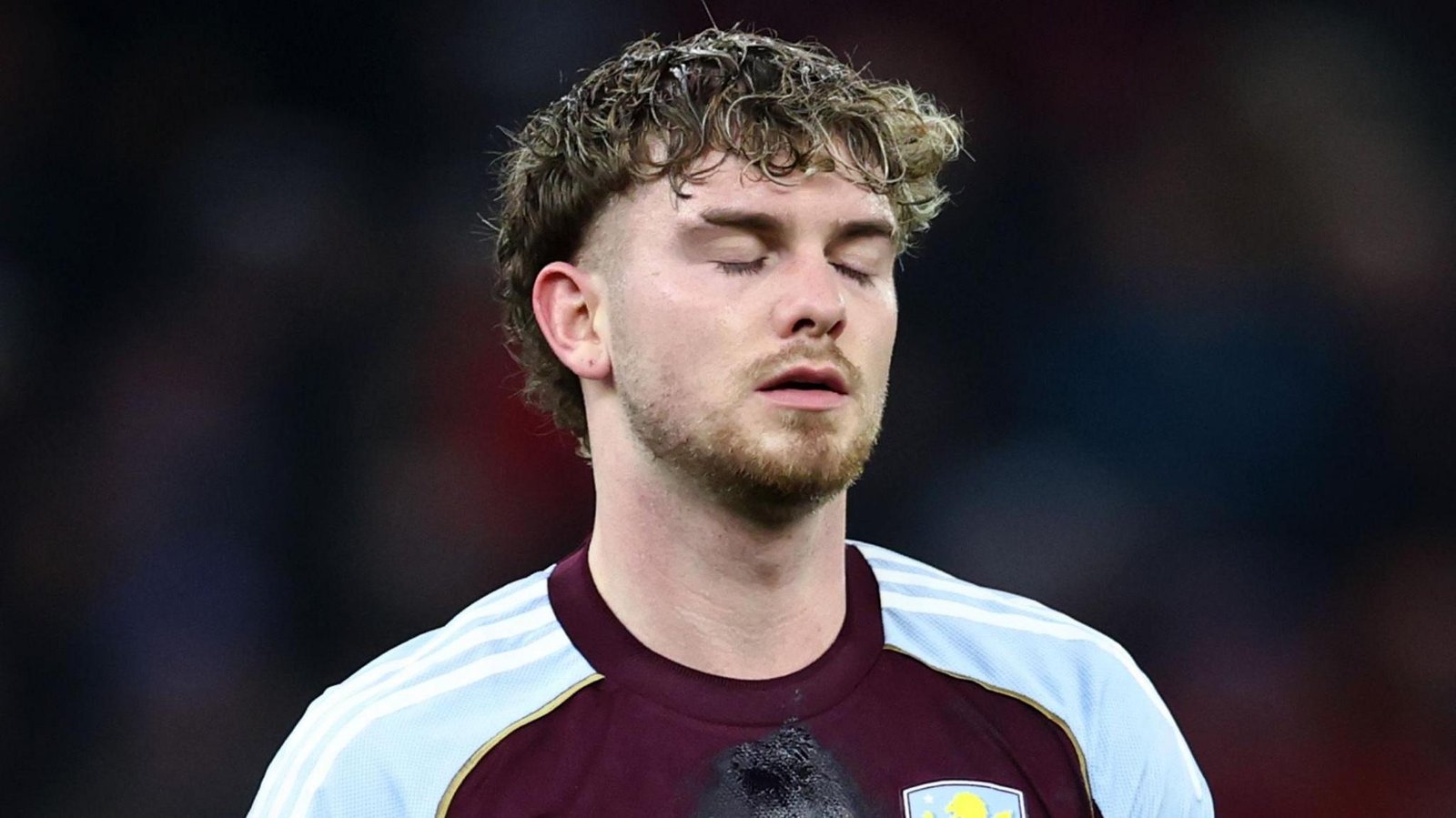
Harvey Elliott was supposed to be a clean, logical deal: a top young Liverpool midfielder goes to Aston Villa, gets regular minutes, and a permanent move follows without drama. Instead, the loan has turned into one of the strangest “no one wins” stories of the season — because the clause designed to make the deal simple is now the clause stopping Elliott from playing.
Villa’s agreement contains an obligation to buy for £35 million if Elliott hits a set appearance trigger, and Unai Emery has been unusually blunt about the issue. He has said the club decided months ago they are not convinced about committing that level of money — meaning every extra appearance pushes Villa closer to a purchase they don’t want.
A clause that changed Elliott’s season
Elliott arrived with real momentum. He is 22, he has elite-level training behind him, and Liverpool expected this to be a pathway move — develop, showcase, then either return improved or be sold at a strong price. But once Villa realised the obligation could become unavoidable, the loan effectively turned into a financial chess match.
The result was predictable: reduced minutes. Reports across the UK media have described him being left out of squads and used sparingly, precisely because the appearance counter became a problem rather than a target.
And here’s the kicker: the numbers are close enough to matter. Different reports track it slightly differently depending on competition, but the pattern is consistent — Elliott has been kept below the line. talkSPORT notes he has only made four Premier League appearances so far, while also highlighting he has returned to action in Europe recently.
Why Liverpool couldn’t “fix it” in January
A normal loan problem might end with a recall and a fresh move elsewhere. Elliott’s situation wasn’t normal.
First, the January window is now closed — the Premier League confirmed it shut on 2 February (with the standard deadline timing widely reported as 7pm GMT / 2pm ET). Second, there was reportedly no recall clause, so even if Liverpool wanted him back, the paperwork wasn’t built for it.
Third, he couldn’t simply jump to another European club on loan because of registration rules: he has already played for two clubs this season. That is why the story briefly drifted into an unexpected direction — MLS.
The MLS escape route that Elliott didn’t take
talkSPORT reported that Charlotte FC were one of the rare, workable options because of how MLS timing interacts with the rules. But Elliott was not keen on the move, and Liverpool also weren’t pushing to bring him back into their set-up mid-season.
So he stayed. Not because it was perfect, but because the alternatives were worse.
Now the window is shut… but the talks can still happen
Here’s the important part that makes this story live even after deadline day: while clubs can’t sign new players outside the window, they can still re-negotiate existing contractual terms between themselves.
That’s why the most realistic outcome is now a “paper solution.” talkSPORT’s Ben Jacobs has suggested that Liverpool and Villa could agree to relax the obligation, for example by converting it into an option or raising the appearance threshold so Villa can play Elliott without triggering the purchase automatically.
This would suit all parties:
- Villa can cover injuries and rotate without accidentally forcing a £35m decision they don’t want.
- Elliott can finally play football again instead of training in limbo.
- Liverpool can protect the player’s value by putting him back in the shop window ahead of the summer.

Why Elliott is suddenly getting minutes again
A cold reality of modern football: injuries change everything. When squads get stretched, managers become more pragmatic. Elliott has recently been pulled back into the picture — starting a European match and appearing off the bench domestically — because Villa need bodies and solutions.
But Emery’s stance hasn’t magically softened. His earlier explanation still frames the entire problem: play Elliott too much, and Villa get forced into a purchase they already decided against.
What this means for the summer
Unless something dramatic changes, Elliott’s long-term future looks likely to be away from Villa and potentially away from Liverpool. The loan has become less of a “fit test” and more of a warning: if a club is unwilling to back a player financially, that lack of conviction usually doesn’t reverse.
For Liverpool, the key question is simple: does Arne Slot see Elliott as a meaningful part of next season’s plan? If not, the club’s priority will be to get Elliott playing between now and May — because nothing damages a young player’s market faster than months of inactivity.
And that’s why the clause matters so much. £35m is not small money. But the bigger cost might be wasting half a season of development for a player who should be entering his peak years.
The bottom line
Elliott’s Villa loan isn’t failing because he can’t play. It’s failing because the contract built around his minutes turned minutes into a risk.
If Liverpool and Villa amend the deal, you’ll probably see Elliott reappear quickly — not because hearts have changed, but because incentives finally align. If they don’t, then he remains a talented footballer trapped in a situation where everyone is protecting themselves… and the player pays the price.
If you want, Vokshi, I can now produce a tighter “matchday angle” version (more fan-energy, sharper paragraphs, stronger hook) or a more “transfer-insider” version for Footstrike — still fully original, but fitted to your site voice.