Liverpool’s right-back position has gone from “manageable” to “mission critical” in a matter of weeks, and the Conor Bradley injury update is the reason why. What first looked like a season-ending blow is now being discussed in even darker terms by injury experts — terms that stretch well beyond May and into the next campaign, maybe even further.
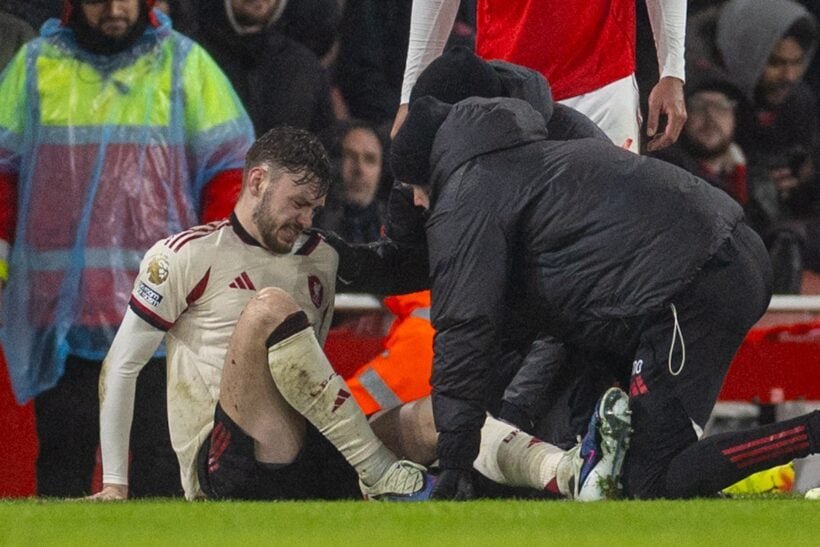
Bradley’s nightmare moment came in early January, right at the end of Liverpool’s 0–0 draw with Arsenal at the Emirates. The 22-year-old Northern Ireland international went down by the touchline late in stoppage time and needed a stretcher to leave the pitch. It was one of those scenes that instantly changes the mood of a match: the whistle is irrelevant, the points are secondary, and everyone starts thinking about the damage.
Liverpool’s initial message was clear: Bradley would miss the remainder of the season and would require surgery. That alone was enough to shake the club’s plans, because Bradley isn’t just “cover” anymore. With Trent Alexander-Arnold gone, Bradley had started to look like a long-term answer — not perfect, not finished, but good enough to be trusted in big games. That’s why the new discussion around his recovery timeline has hit so hard.

“Late 2026… or even early 2027”: expert warning changes the mood
Injury analyst Ben Dinnery has provided the most sobering assessment so far. Speaking to Anfield Index, he stressed the severity of the situation and hinted the return could be far longer than many fans expected.
His wording is the part that will stick: Bradley’s comeback could “head into the latter part of the year,” and if there is any return in 2026 it would be “a massive bonus” — with a very real possibility it could push into “early 2027.” Dinnery also underlined why this is not a straightforward recovery: tests indicated both bone damage and ligament damage, and he raised concern about the mechanism of the injury, suggesting it resembled a serious ACL-type scenario even if the diagnosis is not being presented as a clean “ACL rupture” headline.
That last point matters, because it helps explain why people are nervous. When a player’s knee injury involves multiple structures, timelines become harder to predict and setbacks become more common. Even when surgery goes well, the full return isn’t only about being pain-free — it’s about trust in the joint, sharp changes of direction, and the ability to play without hesitation.
Liverpool’s stance is calmer — but not definitive
While the expert warning points toward a worst-case scenario, Liverpool-linked reporting has pushed back against the idea that Bradley is automatically out for the entire calendar year. The club’s diagnosis is described as unchanged, and there is still internal hope that he can be back for the start of the 2026/27 season.
This is where the story becomes complicated rather than simply grim. Two things can be true at once: the club can be optimistic about recovery, and independent experts can still believe the timeline could drift. In modern football, most clubs avoid putting a hard date on serious injuries for one reason — it creates a public deadline the body may not respect.
Bradley himself sounded like a player trying to take control of the narrative after surgery, posting that the comeback “starts now,” admitting it won’t be for a while, but saying he can’t wait to return for Liverpool and Northern Ireland. That message doesn’t give a timeline, but it does show the mentality: he is already thinking like someone who plans to be back, not someone whose career has paused indefinitely.
Why this hurts Liverpool more than most injuries
If this was a centre-back injury, Liverpool could shuffle the deck. If it was a winger injury, they could rotate. But right-back is different because the squad is thin there and because Liverpool’s style depends on that role doing a lot of work: building play, pressing wide, defending transitions, and covering enormous distances.
And just as Bradley went down, Liverpool’s other specialist option also got hit.
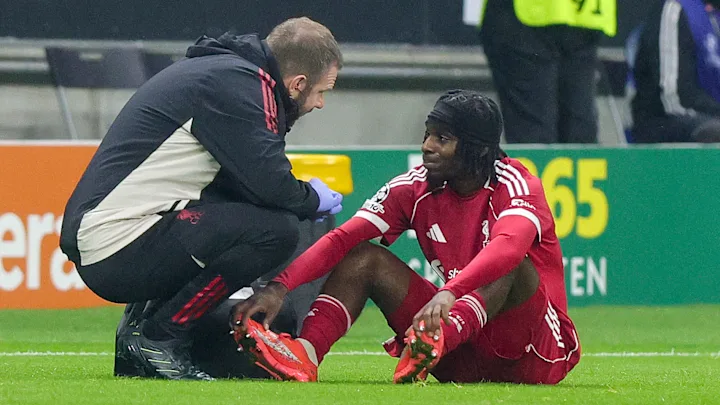
Jeremie Frimpong, signed as a major right-sided solution, has had a disrupted debut season with recurring physical issues. His latest setback came in the Champions League demolition of Qarabag, when he was forced off just four minutes into the match with a groin issue, ruling him out for several more weeks. Liverpool are confident that injury is not seen as serious long-term, but the timing is awful: “not serious” still means “not available,” and that’s what Liverpool need right now.
Slot’s current solutions aren’t ideal — they’re survival
Arne Slot has had to get creative, and creative is never the first preference when you’re heading into high-pressure fixtures. With both specialist right-backs unavailable, Liverpool have already used midfielders in that role:
- Wataru Endo has filled in at right-back in Europe.
- Dominik Szoboszlai has also been used there, including during a 4–1 win over Newcastle.
- Curtis Jones has been mentioned as an option depending on the shape and opponent.
- Joe Gomez, when fit, becomes the “safest” natural defender to cover the role — but his own injury record makes heavy reliance a gamble.
None of these options is perfect. Playing a midfielder at full-back can reduce the natural timing of overlaps and weaken recovery speed in defensive transitions. It can also pull key midfield talent away from the area where Liverpool need control most. But right now, this isn’t about perfection — it’s about getting through games without the position becoming a target.
The transfer angle: Liverpool tried, but the door shut
The bigger issue is that Liverpool had already explored the market. There were reports of an attempt to sign Lutsharel Geertruida on loan (linked to RB Leipzig and a Sunderland loan situation), but the move fell through when the other club could not arrange a replacement. That is the brutal reality of deadline-day football: you can want a player, you can even have a route, and it still collapses because one piece in the chain breaks.
So Liverpool are left where they are — patched, improvised, and hoping the injury list starts moving in the right direction.
What this means going forward
For Bradley personally, this is a cruel setback. He had started to look like a proper first-team right-back — not a “future project,” but a player who could handle responsibility. Now the focus becomes recovery, step-by-step, without rushing.
For Liverpool, the message is sharper: the right-back position needs planning, not just short-term fixes. If Bradley’s return is closer to the club’s hope — early 2026/27 — Liverpool still need cover. If the expert timeline proves correct and he doesn’t return until late 2026 or even early 2027, then the summer window becomes non-negotiable: Liverpool will need another reliable right-back, not as a luxury, but as protection for the entire season.
Either way, the “nightmare scenario” is already here. Liverpool are fighting through matches without a natural solution at right-back — and until the injury picture becomes clearer, Slot’s biggest test may be keeping the team stable while the squad around that position keeps shifting.